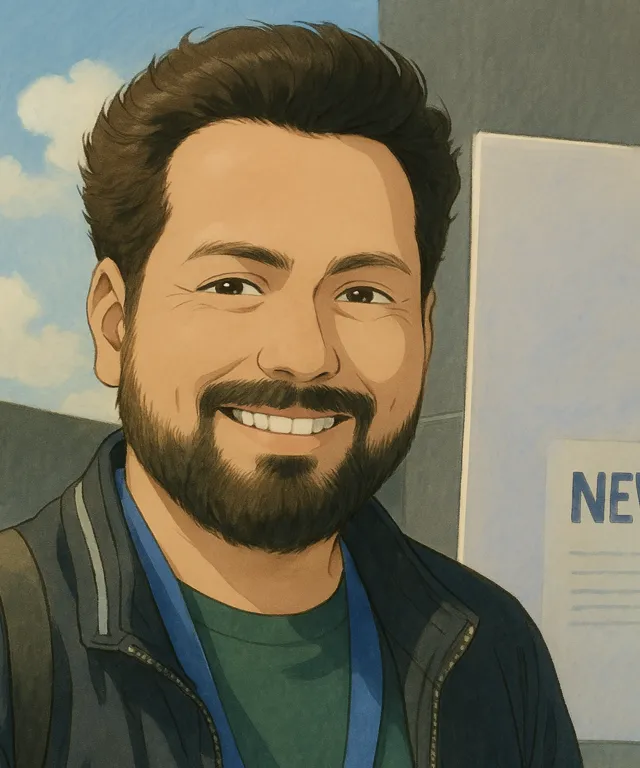


Hi There! My name is Pawan Kumar. I am an assistant professor at IIIT-H since approximately 2017.
I lead the OPTIMAL group at IIIT-H. We are a group of mathematicians and computer scientists working together!
In my group, we are interested in designing provably fast optimization and machine learning algorithms.
The fast and robust algorithms for the problems mentioned above are obtained either by important mathematical insight, or via clever algorithm design. More specifically, in machine learning as well as in scientific computing, newer insights via numerical analysis for optimization algorithms, which are at the core of most of these domains, can lead to robust and fast algorithms. On the other hand, a clever use of data structures, and a mapping to parallel architectures (FPGA, GPU, Clusters, etc) for the existing algorithms can lead to algorithms that run fast on modern day hardware.
In general, I believe that robust numerical algorithm and high performance algorithm design go hand in hand, and they can't be developed in isolation.
PhD INRIA Saclay
Ile-de-France, Saclay, France
MS IIT Guwahati
Guwahati, India
FU Berlin
Department of Math and CS, Einstein Center of Mathematics, Berlin, Germany
Fraunhofer ITWM
Marie Curie ERCIM Fellowship, Germany
KU Leuven & Intel Exascience Lab
Leuven, Belgium
AIWranglers Website Launched New
The new website aiwranglers.org is launched. Check back for more updates! This will be a one-stop shop for education and training for AI.
New Course: Linear Algebra Interactive
Master Linear Algebra with visualizations, quizzes, and rigorous theory. From basics to SVD!
New Course: Probability & Statistics Interactive
Learn probability with interactive proofs, quizzes, and historical context.
New Blog Post: AI Wrangler
Check out my latest thoughts on being an AI Wrangler.
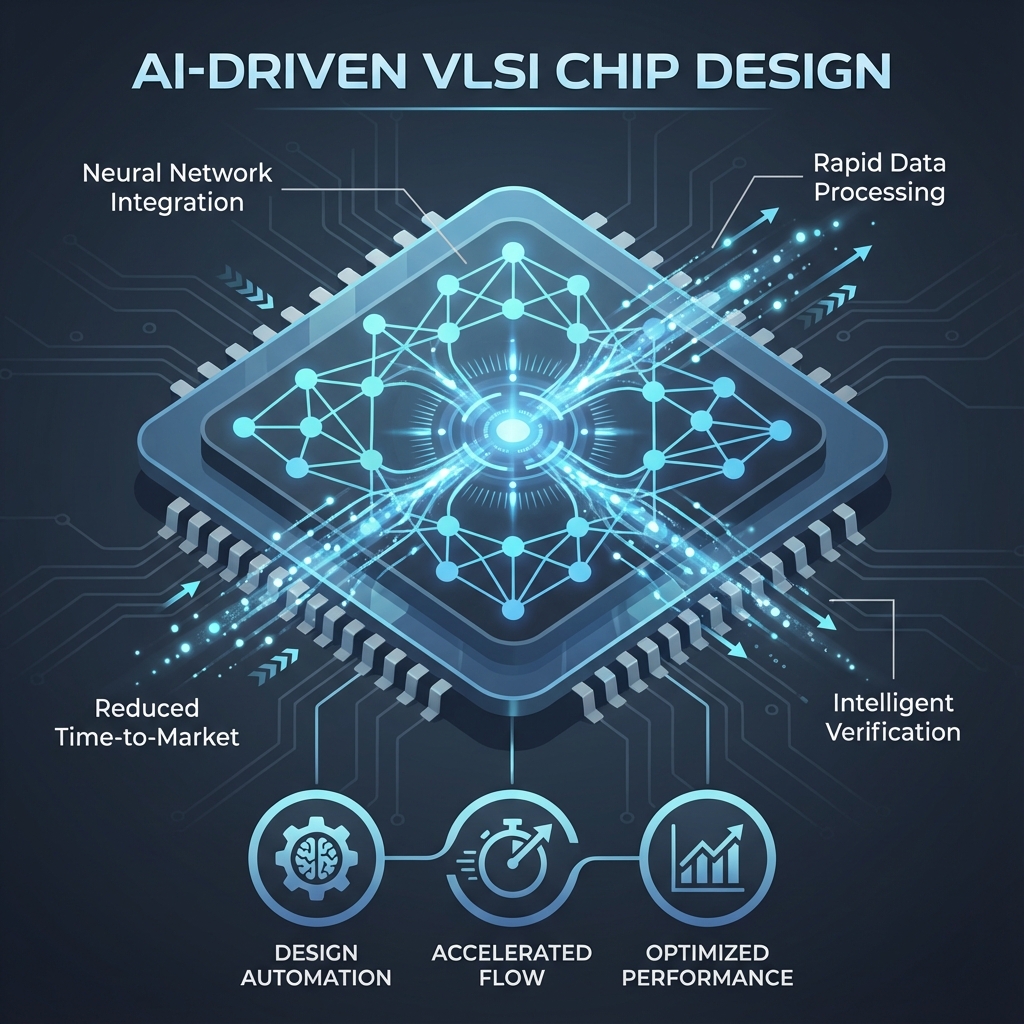
🏎️ AI in VLSI?
Data generation takes days! 🐢 Delays in design?
See our work on Data Augmentation for faster simulations! ⚡
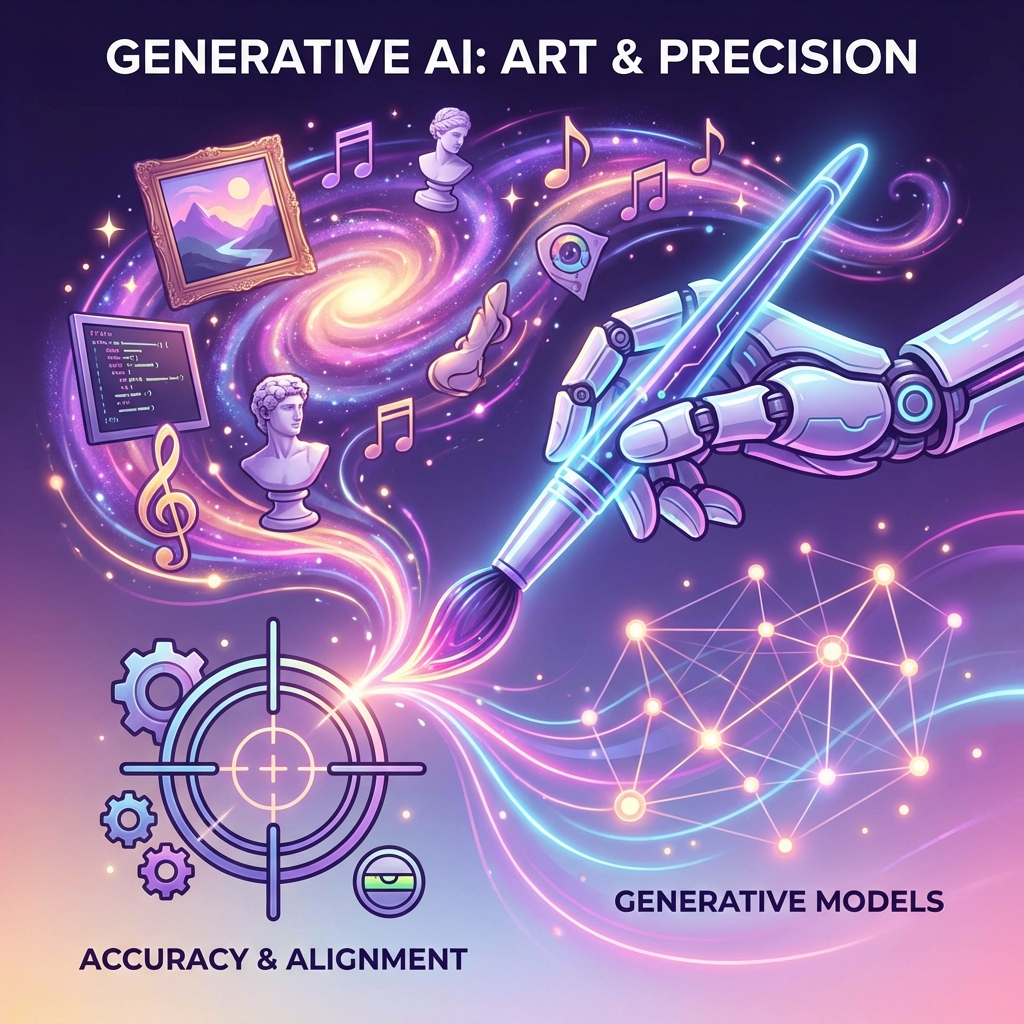
🎨 Generative AI
How to improve accuracy? 🎯 Align for aesthetics & safety? 🛡️
Check
out our work on Robust Generative Models!

🤖 Scared of Agents?
Why not make them safe? 🤝 Explainable reasoning!
Trusted like humans.
Building Safe & Aligned AI.
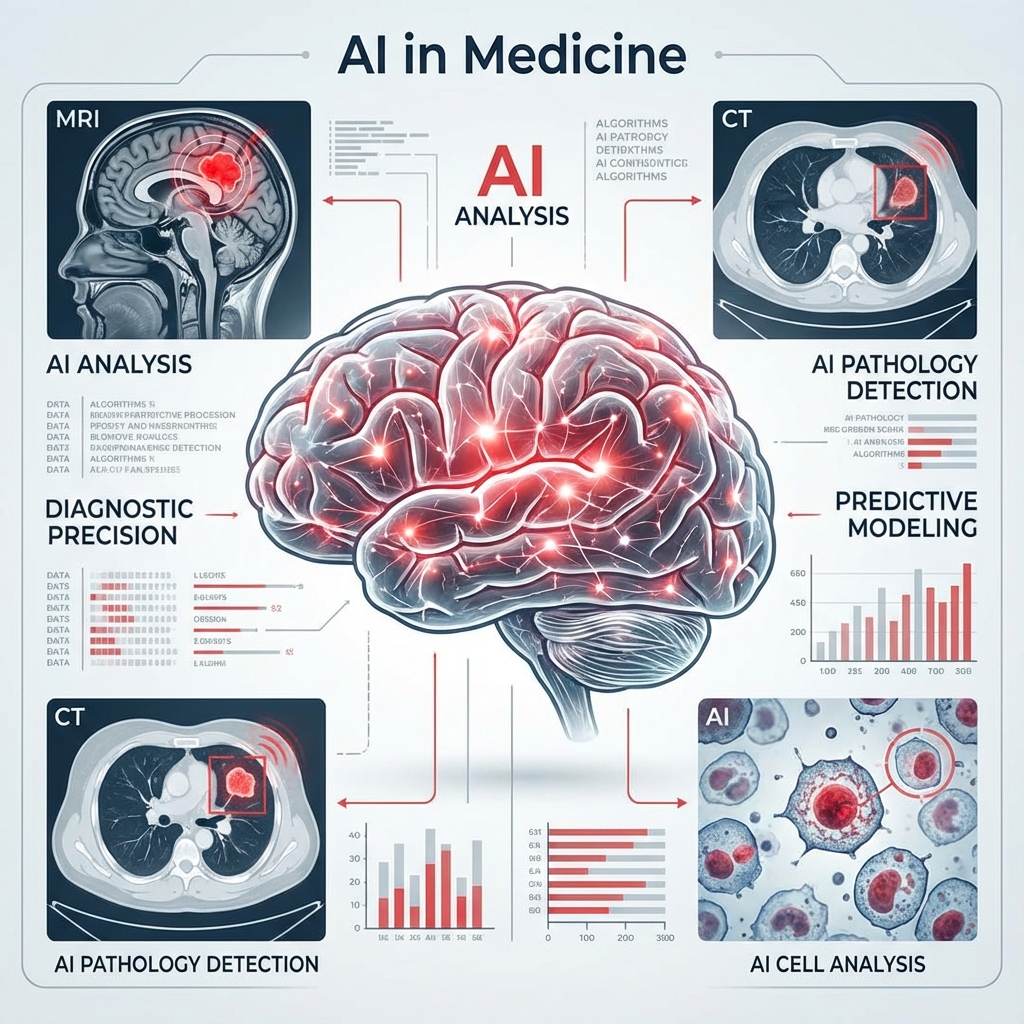
🏥 Medical AI Opportunity!
Body is complex! 🧠 Why do radiologists disagree? 🤔
Modeling
ambiguity in segmentation. See our Medical AI research!

📉 Most Problems are Optimization!
How to model? 🧩 Find fast solutions? 🚀
Using Optimization in AI for better generalization.
Research Overview
I have 15 years of experience in HPC, Machine Learning, and Scientific Computing.
My current research focuses on Optimization, Safety and Alignment in AI, Verification of AI, and AI for Science.
Research Activities
Key Highlights & Achievements
- 🧐 Rigorous analysis of algorithms
- 💻 AI for VLSI
- 🏥 AI for Medical
- 🤖 Scalable Multiagent systems
- 🎨 Efficient Image Generations Ideas
- ⚡ Fast Solvers for 3D reconstruction
- ⚛️ Physics Inspired NN (Trending)
- 🤝 Collaborations with industry (Apple, Microsoft, Qualcomm)
- 🌏 Collaborations with international researchers (University of Sydney)
-
Test-Time Visual Concept Anchoring via Entropic Optimal Transport, P. Kumar, CVPR, VisCon Workshop, 2026.
-
ConceptOT: Fine-Grained Vision-Language Alignment via Low-Rank Unbalanced Optimal Transport, P. Kumar, CVPR, VisCon Workshop, 2026.
-
MA-SafeDiffuser: Safe Multi-Agent Planning with Diffusion Probabilistic Models, K. Ravish, et al., AAMAS 2026.
-
Safe Offline Reinforcement Learning using Diffusion Policies, A. Kushwaha, et al., AAMAS 2026.
-
Hierarchical Sparse Plus Low Rank Compression of LLM, Aditi Gupta, et. al., CODS 2025.
-
Fast and Efficient Modern BERT based Text-Conditioned Diffusion Model for Medical Image Segmentation, Siddharth, et. al., CVIP 2025.
-
Alignment and Safety of Diffusion Models via Reinforcement Learning and Reward Modeling: A Survey, P. Lamba, et. al., under submission, arXiv 2025.
-
A Survey of Safe Reinforcement Learning and Constrained MDPs, A. Kushwaha, et. al., under submission, arXiv 2025.
-
Review of Extreme Multilabel Classification, A. Dasgupta, S. Katyan, S. Das, P. Kumar, under submission, arXiv 2024.
-
A Gauss-Newton Approach for min-max Problem in GAN, N. Mishra, P. Jawanpuria, B. Mishra, P. Kumar, IJCNN 2024. (Rank A)
-
A label-free sensing of creatinine using radio frequency-driven lab-on-chip (LOC) system, S. Sinha, et al., Engineering Express Journal, IOP Science, 2024.
-
Qualitative Data Augmentation for Performance Prediction in VLSI circuits, P. Srivastava, P. Kumar, Z. Abbas, Elsevier, VLSI Integration Journal, 2024.
-
Data Augmentation for Performance Prediction in VLSI circuits, P. Srivastava, P. Kumar, Z. Abbas, ISCAS, Singapore 2024. (Rank: A)
-
Riemannian Hamiltonian methods for min-max optimization on manifolds, A. Han, et al., SIAM J. Optimization 2023.
-
alphaElimination: Using deep reinforcement learning for sparse Gaussian Elimination, A. Dasgupta, P. Kumar, ECML 2023.
-
marl-jax: Multi-agent Reinforcement Leaning framework for Social Generalization, K. Mehta, A. Mahajan, P. Kumar, ECML Video, 2023. (Rank A)
-
Light-weight Deep Extreme Multilabel Classification, I. Mishra, A. Dasgupta, B. Mishra, P. Jawanpuria, P. Kumar, IJCNN 2023. 🏆 Best Full Paper in Non-Oral! (Acceptance rate: 0.001) (Rank A)
-
Effects of Spectral Normalization in Multi-agent Reinforcement Learning, K. Mehta, A. Mahajan, P. Kumar, IJCNN 2023. (Rank A)
-
Angle based dynamic learning rate for gradient descent, N. Mishra, P. Kumar, IJCNN 2023. (Rank A)
-
Enhancing ML model accuracy for Digital VLSI circuits using diffusion models, P. Srivastava, Z. Abbas, P. Kumar, MLSys, NeurIPS, 2021. (Rank: A)
-
Adaptive Consensus Optimization Method for GANs, S. Danisetty, S. Mylaram, P. Kumar, IJCNN 2023. (Rank A)
-
Hybrid Tokenization and Datasets for Solving Mathematics and Science Problems Using Transformers, P. Mandlecha, S. Chatakonda, N. Kollepara, P. Kumar, SDM, 2022, (Rank: A).
-
A Riemannian Approach to Extreme Classification Problems, J. Naram, T. Sinha, P. Kumar, CODS-COMAD, 2022, (Rank: B).
-
Nonnegative Low-Rank Tensor Completion via Dual Formulation with Applications to Image and Video Completion, T. Sinha, J. Naram, P. Kumar, WACV, 2022, (Rank: A).
-
SCIMAT: Science and Mathematics Dataset, S. Chatakonda, N. Kollepara, P. Kumar, DCAI, NeurIPS-W, 2021, (Rank: A).
-
Structured Low-Rank Tensor Learning, J. Naram, T. Sinha, P. K., NeurIPS-W, 2021, (Rank: A).
-
A Fast Parameter-Free Preconditioner for Structured Grid Problems, A. Agarwal, S. Kakkar, P. Kumar, Supercomputing 2021, (Rank: A).
-
SCIMAT: An Extensive Dataset and Results with Transformer, S. Chatakonda, N. Kollepara, P. Kumar, BDA 2021, (Rank: National).
-
A Deflation Based Fast and Robust Preconditioner for Bundle Adjustment, Das, Shrutimoy and Katyan, Siddhant and Kumar, Pawan, WACV, pp. 1781-1788, 2021, (Rank: A) (Video).
-
Two-Grid Preconditioned Solver for Bundle Adjustment, S. Katyan and S. Das and P. Kumar, WACV, pp. 3588-3595, 2020, (Rank: A) (Video).
-
Domain Decomposition Based Preconditioned Solver for Bundle Adjustment, S. Das, S. Katyan, PK, Computer Vision, Pattern Recognition, Image Processing, and Graphics, Springer Singapore, pp. 64-75, 2020, (Rank: National).
-
Efficient FPGA Implementation of Conjugate Gradient Methods for Laplacian System Using HLS, S. Rampalli, N. Sehgal, I. Bindlish, T. Tyagi, P. Kumar, FPGA '19, pp. 308-309, 2019, (Rank: A).
-
DXML: Distributed Extreme Multilabel Classification, P. Kumar, BDA 2021, (Rank: National).
-
Fast Preconditioned Solver for Truncated Saddle Point Problem in Nonsmooth Cahn-Hilliard Model, Pawan Kumar, Recent Advances in Computational Optimization, Springer, 2016. (Impact Factor = 0.86).
-
On Relaxed Nested Factorization and Combination Preconditioning, P. Kumar, L. Grigori, F. Nataf and Q. Niu, IJCM, 2016, (Impact Factor = 1.9, Q2).
-
Multilevel Communication Optimal Least Squares, P. Kumar, ICCS 2015, Vol. 51, pp. 1838-1847, 2015 (Rank: A).
-
Aggregation Based on Graph Matching and Inexact Coarse Grid Solve for Algebraic Two Grid, Pawan Kumar, IJCM, 2014. (Impact Factor = 1.9, Q2).
-
Communication Optimal Least Squares Solver, P. Kumar, HPCC 2014, IEEE Computer Society, pp. 316-319, 2014, (Rank: B).
-
High Performance Solvers for Implicit Particle in Cell Simulation, P. Kumar, et al., ICCS 2013, Vol 18, pp 2396-2405, 2013, (Rank: A).
-
Multi-threaded Nested Filtering Factorization Preconditioner, P. Kumar, K. Meerbergen, and D. Roose, PARA 2012, Springer, 2013. (Rank: National, Nordic Countries).
-
Modified Tangential Frequency Filtering Decomposition and its Fourier Analysis, Q. Niu, L. Grigori, P. Kumar, F. Nataf, Numerische Mathematik, Vol. 116, pp. 123-148, 2010. (Impact Factor = 2.7, Q1).
💰 Grants and Fellowships (Total: 2.9 Crores (350K USD)! PI/Co-PI Combined)
- 🎓 Fellowships: CSIR/UGC PhD Fellowships (by Students) (Machine Learning and Optimization), 2022-now.
- 🔬 Research Grant: Qualcomm Innovation Fellowship Grant (Deep Learning), 2022-now.
- 🔬 Research Grant: KCIS Challange Main Grant (Optimization methods and ML for Biosensing), 2021-now.
- 🔬 Research Grant: IHUB-Data (Optimization methods for Healthcare and Transportation), 2021-now.
- 🔬 Research Grant: IHUB-Data (Diffusion Models for Healthcare Applications), 2022-now.
- 🔬 Research Grant: MAPG (Microsoft Academic Partnership) (Optimization methods for Deep Learning), 2021-now.
- 🔬 Research Grant: Kohli Seed Grant (with Dr. Abbas, et. al.) (BioSensing chip with AI/ML), 2021-now.
- 🔬 Research Grant: Ripple Center of Excellence Grant (Distributed Optimization, RL, and Blockchain), 2021-now.
- ✈️ Travel Grant: INAE Travel Grant, 2020.
- 🔬 Research Grant: DST MATRICS: Mathematical Research Impact Centric Support (Optimization Methods and Solvers for Saddle Point Problems), 2018-2021.
- 🔬 Research Grant: ERCIM: European Research Consortium for Informatics and Mathematics, (High Performance Computing) 2012-2013.
Teaching Overview
I have 9 years of teaching experience in Algorithms, Linear Algebra, Discrete Structures (Graph Theory, Logics, Algebra), Probability and Statistics, Applied Optimization, Advanced Optimization, Mathematics of Generative Modelling, Optimization on Manifolds, and Introduction to Parallel Scientific Computing.
Teaching Highlights
Key Achievements
- 🎥 Indepth generative models (YouTube)
- 📈 Optimization (applied to ML)
- 📺 7 Youtube playlists
- 🎬 Video editing for online courses
Software Overview
I have over 20 years of coding and software development experience in Fortran, C/C++, Python, Shell, and more.
I have been a prolific coder since my bachelor's, developing complex packages such as Particle-in-Cell codes. I have developed many codes on parallel and distributed memory algorithms on large supercomputers like IDRIS (France) and SuperMUC (Germany). Now I develop codes in Python for Machine Learning.
Software Highlights
Key Achievements
- 🚀 Developed scalable parallel algorithms
- 🧠 Developed machine learning algorithms (LLM compression)
- ⚡ Developed mixed precision algorithms for LLM
- ⚛️ Developed solvers for physics simulations (particle in cell)
- 🔬 Developed fast solvers for scientific simulations
- 🖥️ Extensive practical knowledge of MPI, Multithreading, GPU with Python
- 👨🏫 Experience in Teaching (Course: Parallel Computing, Tutorials in Python)
Software Projects
📸 Solver for Bundle Adjustment
Fast, scalable solvers for large-scale 3D reconstruction.
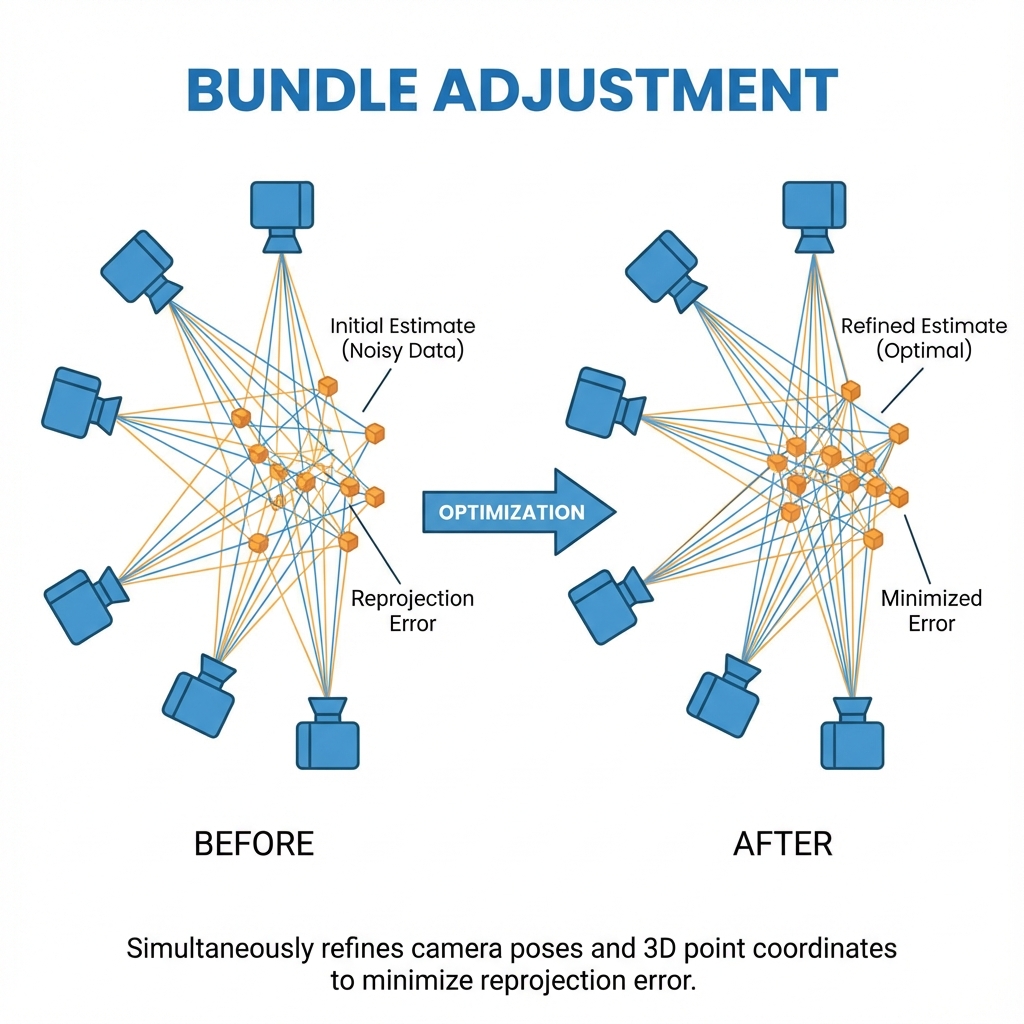
What is Bundle Adjustment?
Optimizing 3D structure and camera parameters simultaneously. Minimizing reprojection error for precise reconstruction.
Why Fast Solvers?
Using Deflation and Multigrid methods to solve massive linear systems efficiently. Speeding up convergence!
The Tech Stack
Written in high-performance C++. Seamlessly integrates with Google's Ceres Solver for robust optimization.
🤖 MARL-JAX Framework
Multi-Agent Reinforcement Learning for Social Generalization.
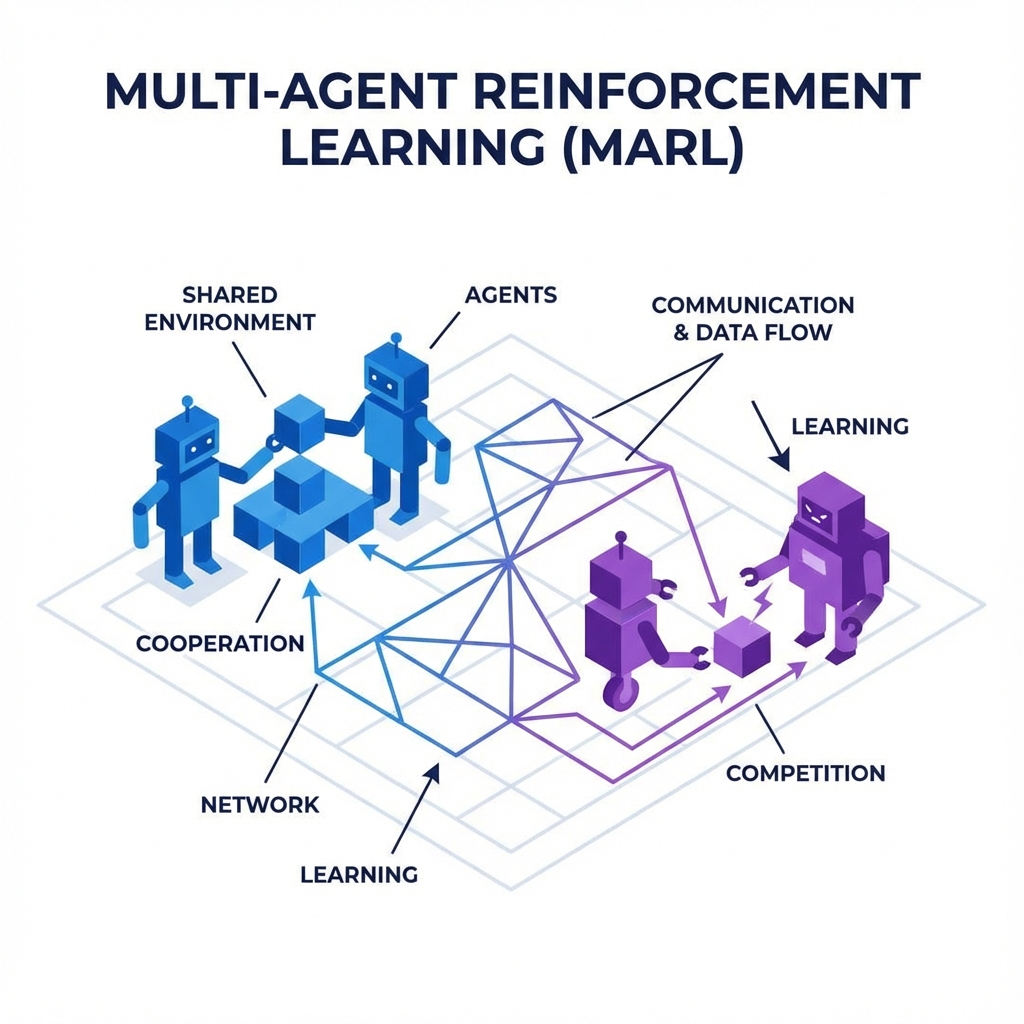
What is MARL-JAX?
A powerful framework for training populations of agents in cooperative and competitive multi-agent environments.
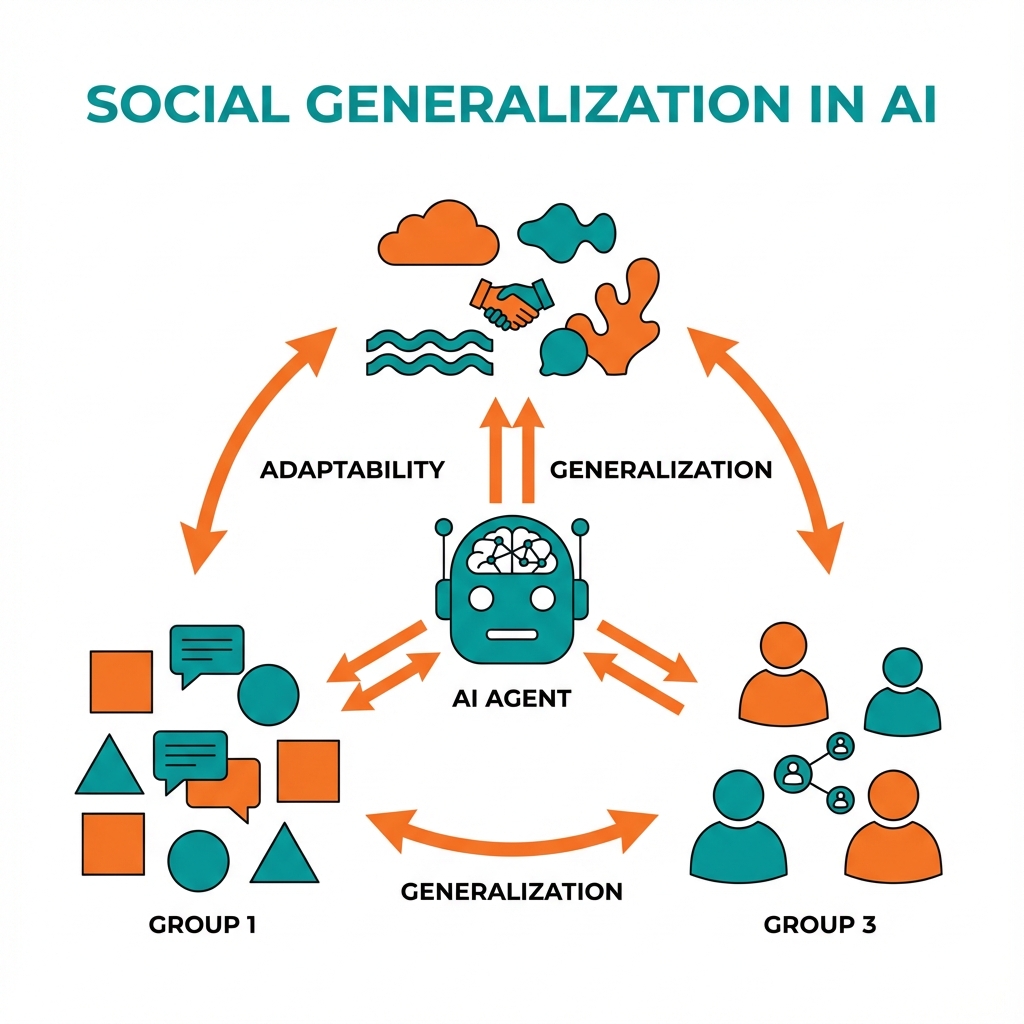
Social Generalization
Evaluating agents' ability to adapt and generalize when interacting with diverse background agents.
The Tech Stack
Built on DeepMind's JAX ecosystem for high-performance, accelerated RL research.
{{ category.name }}
{{ category.desc }}
{{ selectedCategory }}
{{ blog.title }}
{{ blog.category }}
Mentorship
I have mentored more than 30 students with publications in leading venues. I have 8 years of experience in mentorship.
All students are fresh with no prior experience in research, and these are their first publications.
Aditi Gupta
2023-2026
Now: Axtria
Published in CODS-2025
Prasha Shrivastava
2020-2024
Now: Texas Instruments
Published in ISCAS, Integration journal, NeurIPS-W
Neel Mishra
2020-2022
Now: Microsoft, Bangalore
Published two in IJCNN
Kinal Mehta
2020-2022
Now: Google Bangalore
Published in ECML, IJCNN
Shrutimoy Das
2019-2021
Now: IIT, Gandhinagar
Published two in WACV
Siddhant Katyan
2019-2021
Now: PhD University of Laval
Published two in WACV
Abhinav Aggarwal
2018-2019
Now: Google, USA
Published in SC
Shivam Kakkar
2018-2019
Now: Tower Research
Published in SC
Snehith Chatakonda
2019-2021
Now: Samsung R&D
Published in NeurIPS-W, BDA, SDM
Ishita Bindlish
2018-2020
Now: Weights and Biases, USA
Published in FPGA
Sahithi Rampalli
2018-2020
Now: Startup
Published in FPGA
Natasha Sehgal
2018-2020
Now: Meta
Published in FPGA
Arpan Dasgupta
2022-2024
Now: Google Deepmind, Bangalore
Published in ECML, IJCNN
Tanmay Sinha
2020-2022
Now: Microsoft Research, Northwestern
Published in NeurIPS-W, CODS, WACV
Jayadev Naram
2020-2022
Now: Chalmers U
Published in NeurIPS-W, OPT, CODE, WACV
Istasis Mishra
2020-2023
Now: Revefi
Published in IJCNN (Best paper award)
Anveshi Shukla
2017-2018
Now: Google, Hyderabad
-
Ayush Mishra
2018-2020
Now: Google, London
-
Pratik Mandlecha
2018-2019
Now: Goldman Sachs, USA
Published in SDM
Sachin Chatakonda
2018-2020
Now: Wadhwani, now: Sony Brook
Published in IJCNN, NeurIPS-W
Neeraj Kollepara
2018-2020
Now: BrowserStack
Published in SDM, NeurIPS-W, BDA
Tanya Tyagi
2018-2020
Now: MS Virginia Tech
Published in FPGA
Swarnim Sinha
2021-2024
Now: AMD
Published in Engineering Express Journal