Introduction to Numerical Methods
Numerical vs. Symbolic Calculation
Numerical Calculation
Involves numbers directly. Manipulates numbers to produce a numerical result.
Symbolic Calculation
Symbols represent numbers. Manipulates symbols according to mathematical rules to produce a symbolic result.
Analytic Solution
The exact numerical or symbolic representation of the solution. May use special characters such as $\pi$, $e$, or $\tan(83)$.
Numerical Solution
The computational representation of the solution. Entirely numerical.
Numerical Computation and Approximation
Numerical Approximation is needed to carry out steps in numerical calculation.
Symbolic Computation, Numerical Solution
Numerical Computation, Numerical Approximation
Core Concepts
Method vs. Algorithm vs. Implementation
- METHOD A general (mathematical) framework describing the solution process. Is it a "good" method?
- ALGORITHM A detailed description of executing the method. Is it a robust algorithm?
- IMPLEMENTATION A particular instantiation of the algorithm. Is it a fast implementation?
The Big Theme: Trade-offs
 Accuracy
History of Numerical Algorithms
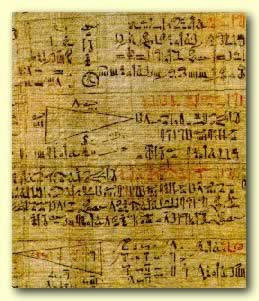
Rhind Papyrus (1650 BC)
Ancient Egypt. Contains 85 problems. Approximates $\pi$ with $(8/9)^2 * 4 \approx 3.1605$.

Archimedes (287-212 BC)
"Method of Exhaustion". Determined $\frac{223}{71} < \pi < \frac{22}{7}$ (3.1408 < $\pi$ < 3.1429).
Method of Exhaustion:
- A circle is a polygon with infinite sides.
- $C_n$ = circumference of n-sided polygon.
- $\lim_{n\rightarrow\infty} C_n = \pi$.
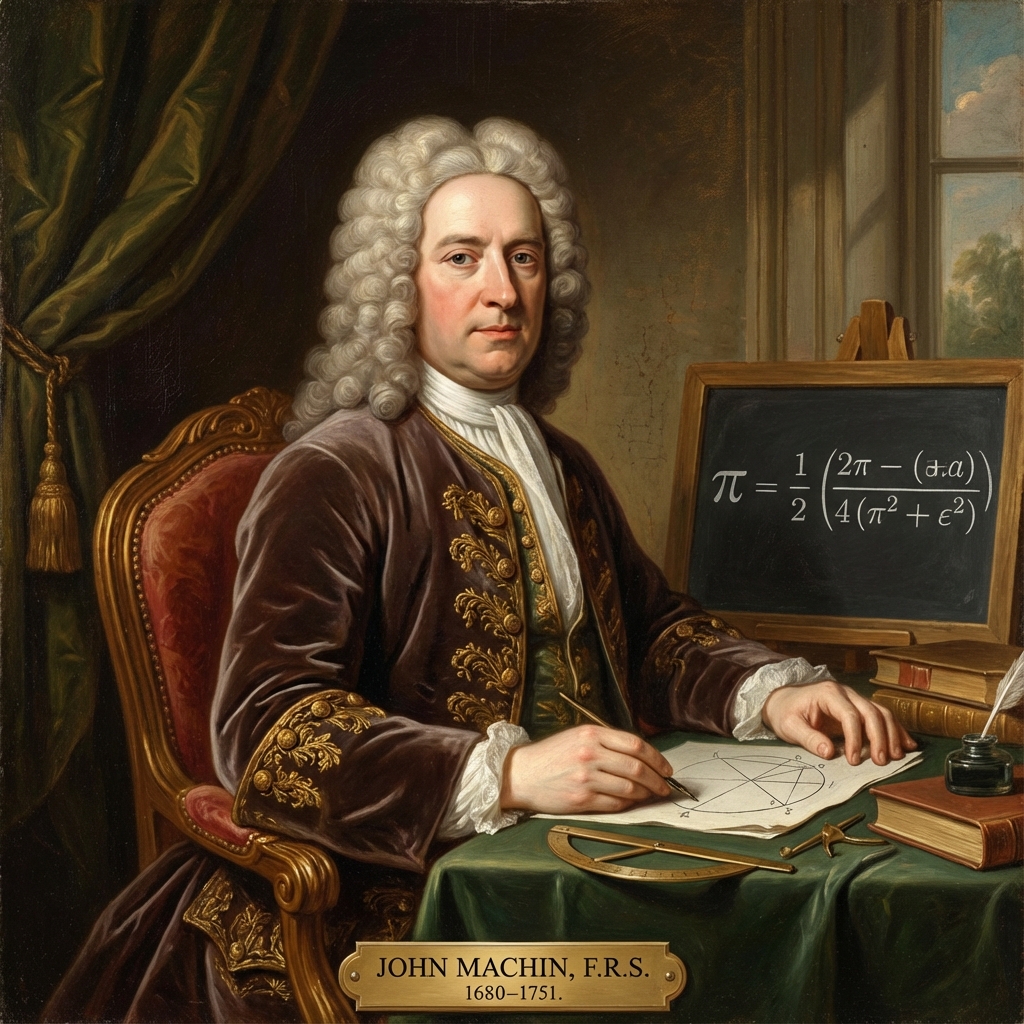
John Machin (1700)
$\pi = 16 \arctan(\frac{1}{5}) - 4\arctan(\frac{1}{239})$.
Calculated first 100 digits of $\pi$.
Numerical Analysis
"Study of algorithms for the problems of continuous mathematics"
— Trefethen
The Big Questions
- How algorithms work and how they fail
- Why algorithms work and why they fail
Numerical Focus
How close is the solution?
How fast and cheap?
Sensitivity to small variations?
Role of finite precision?
⚠️ Real World Impact: Failures
- Patriot Missile (1991): Rounding errors resulted in failure to intercept, 28 deaths.
- Ariane 5 Rocket (1996): Integer overflow caused explosion just after lift-off.
- Sleipner A Platform (1991): Inaccurate finite element analysis caused sinking ($1 Billion loss).
CS Connections
Taylor Series Approximation
Computers can only add and multiply. They can't directly evaluate $e^x$, $\cos(x)$, or $\sqrt{x}$. We use Taylor Series approximations.
The Taylor Series
Example: $e^x$ (at $c=0$)
\[ e^x = 1 + x + \frac{x^2}{2!} + \frac{x^3}{3!} + \dots \]
We can't evaluate infinite terms, so we truncate to a polynomial $p_n(x)$.
Evaluation of $e^2$:
- $p_0(2) = 1$ (Poor fit)
- $p_1(2) = 1 + 2 = 3$ (Better)
- $p_2(2) = 1 + 2 + 2 = 5$ (Good fit)
Error Analysis
\[ f(x) = p_n(x) + E_n(x) \]
Where the error term is:
\[ E_n(x) = \frac{(x-c)^{n+1}}{(n+1)!}f^{(n+1)}(\xi) = \mO(h^{n+1}) \]
assuming $h = x-c$
Truncation Error Example: $\sin(x)$
If $x \ll 1$, remaining terms are small ($x^7/7! \dots$).
🧠 Knowledge Check +10 XP
If we approximate $e^x$ using the first 3 terms ($1 + x + x^2/2$), what is the order of the error term?
Process Implementation
Typical process to find $f'(x)$ using definition: $f'(x) = \lim_{h\rightarrow 0} \frac{f(x+h) - f(x)}{h}$
Pseudo Code
h = 1
x = 1
for i = 1 to 20 do
  h = h / 2
  y = (f(x+h) - f(x)) / h
  err = |f'(x) - y|
end
Matlab
f = inline('exp(x)');
h = 1;
x = 1;
for i = 1:20
  h = h / 2;
  y = (f(x+h) - f(x)) / h;
  err(i) = abs(f(x) - y);
end
Types of Error
$|x_{true} - x_{approx}|$
$\left|\frac{x_{true} - x_{approx}}{x_{true}}\right|$
Interactive Playground
Experiment with the algorithms below. You can run MATLAB code via Octave Online or Python code directly in your browser.
 MATLAB / Octave (Online)
 Python (Client-Side)
Loading Python environment...